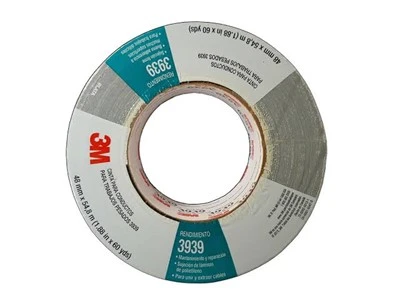
Double-sided tape is a common adhesive material, and its quality directly impacts its performance. To ensure stable product performance, it requires a comprehensive evaluation through a systematic inspection process.
Appearance inspection is the primary step. Visually or with a magnifying glass, inspect the adhesive surface to ensure it is flat, free of impurities, bubbles, or damage, and that the edges are neat. Also, check the backing material (such as film or foam) for wrinkles, stains, or color variations. This step helps quickly identify products with obvious defects.
Dimensional measurement requires measuring tools with an accuracy of 0.01mm to verify that the adhesive layer's thickness, width, and length meet design requirements. The alignment of the backing material and the adhesive layer must also be verified to ensure that deviations are within acceptable limits.
Adhesion testing is a key step, encompassing both initial tack and holding strength. Initial adhesion is measured using a rolling ball test-a standard steel ball is rolled down an inclined plane, and the maximum ball size retained by the adhesive is recorded. For sustained adhesion, the tape is fixed to a standard test plate, a weight is suspended at a specified temperature, and the time it takes for the adhesive layer to peel from the substrate is measured. Peel strength testing is also crucial: a tensile testing machine is used to tear the tape at a constant speed, and the force required per unit width is recorded to ensure bond strength.
Weather resistance and environmental adaptability testing simulates extreme conditions: high temperatures (e.g., 80°C), low temperatures (-20°C), and high humidity (RH90%) are stored for 24-72 hours, followed by retesting for adhesion changes. In some cases, immersion testing in chemical reagents (e.g., alcohol and motor oil) is also required.
Finally, all data is compared against industry standards (e.g., GB/T 2792 and ASTM D3330) and a test report is issued. Only double-sided tape that meets all performance criteria is released to the market. This process not only ensures product quality but also provides a reliable basis for downstream applications.