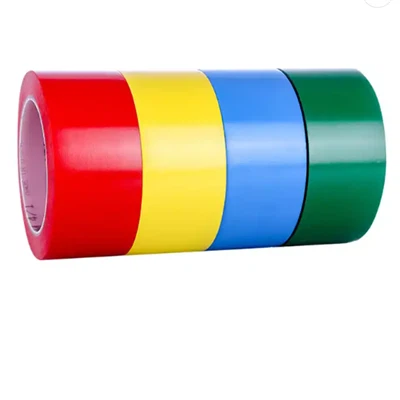
Yo, what's up everyone! As a supplier of PTFE tape, I often get asked about the electrical conductivity of PTFE tape. So, I thought I'd write this blog to break it down for you in a simple way.
First off, let's talk a bit about PTFE tape. PTFE stands for polytetrafluoroethylene. It's a synthetic fluoropolymer of tetrafluoroethylene. You might know it better by its brand name, Teflon. This stuff is pretty amazing. It's got a bunch of great properties like being super resistant to heat, chemicals, and it has a low friction coefficient. That's why it's used in so many different industries, from plumbing to electronics.
Now, when it comes to electrical conductivity, PTFE tape is what we call an insulator. That means it doesn't conduct electricity very well, if at all. In fact, it's one of the best electrical insulators out there. The reason for this lies in its molecular structure. PTFE has a very stable and symmetrical molecular arrangement. The carbon - fluorine bonds in PTFE are extremely strong. These bonds hold onto their electrons tightly, so there aren't many free electrons available to carry an electric current.
Let's dig a bit deeper into the science. Electrical conductivity is all about how easily electrons can move through a material. In conductors like metals, there are lots of free electrons that can flow freely when an electric field is applied. But in PTFE, those strong carbon - fluorine bonds keep the electrons in place. So, when you try to pass an electric current through PTFE tape, it just doesn't happen.
This property of being a great insulator makes PTFE tape super useful in the electrical and electronics industries. For example, in wiring, it can be used to wrap around wires to prevent short - circuits. It can also be used in printed circuit boards to insulate different components from each other.
Now, I want to tell you about some of the PTFE tapes we offer. We have the Poly Temp PTFE Tape 0.13mm – High - Performance Teflon Cloth Tape for Extreme Conditions. This tape is designed for those really tough situations. It can handle extreme temperatures and still maintain its excellent insulating properties. Whether you're working in a high - heat industrial environment or in some high - tech electronic device, this tape is up to the task.
Another great option is the Teflon Tape: Reliable Sealing and Insulation From 0.08mm To 0.18mm. This tape comes in a range of thicknesses, so you can choose the one that's best for your specific application. It's not only a great insulator but also does a fantastic job of sealing. So, if you need to seal a joint in a plumbing system and also want to make sure there's no electrical interference, this tape is perfect.
And then there's our Ultra - Thick 0.18mm Pure PTFE Tape – Heavy - Duty Virgin Teflon for Extreme Heat & Chemical Resistance. This thick tape is like the heavyweight champion of PTFE tapes. It can withstand extreme heat and is highly resistant to chemicals. If you're working in an environment where there are harsh chemicals and high temperatures, this tape will keep your electrical components safe and insulated.
One thing to note is that while PTFE tape is a great insulator, its performance can be affected by certain factors. For example, if the tape gets dirty or contaminated with conductive materials, its insulating properties can be reduced. Also, very high voltages can sometimes cause breakdown in the insulation, but this usually only happens under extreme conditions.
So, to sum it all up, PTFE tape is an excellent electrical insulator due to its unique molecular structure. It's widely used in the electrical and electronics industries because of its ability to prevent the flow of electricity. And if you're in the market for some high - quality PTFE tape, we've got a range of options to suit your needs.
If you're interested in purchasing our PTFE tapes or have any questions about their applications, feel free to reach out. We're always happy to have a chat and help you find the right product for your project. Whether you're a small - scale DIYer or a large - scale industrial manufacturer, we've got the PTFE tape that will work for you.
References


- Van Krevelen, D. W., & Te Nijenhuis, K. (2009). Properties of Polymers: Their Correlation with Chemical Structure; Their Numerical Estimation and Prediction from Additive Group Contributions. Elsevier.
- Billmeyer, F. W. (1984). Textbook of Polymer Science. Wiley - Interscience.