


Tesa Industrial Adhesive Tape: How Invisible Bonding Is Reshaping Modern Manufacturing
Take apart a foldable smartphone, and you will find layers of optical adhesive films beneath the screen. Open the chassis of an electric vehicle, and you will find structural adhesive tapes between the battery pack and the vehicle body. These layers, almost invisible to the naked eye, are replacing screws, rivets, and welding, becoming the quietest yet most critical connection method in modern manufacturing.
Tesa is one of the global players in this field. From consumer electronics to automotive manufacturing, from solar panels to aerospace, the selection of a roll of tape involves a systematic balance among the backing material, adhesive, thickness, temperature resistance, initial tack, and holding power. This article aims to explain one thing clearly: what problems do industrial adhesive tapes actually solve, why are tesa products repeatedly selected in high-end manufacturing applications, and what should purchasers and engineers really look at when choosing a tape?
01 The Underestimated Industrial Component: What Does Industrial Tape Actually Bond?
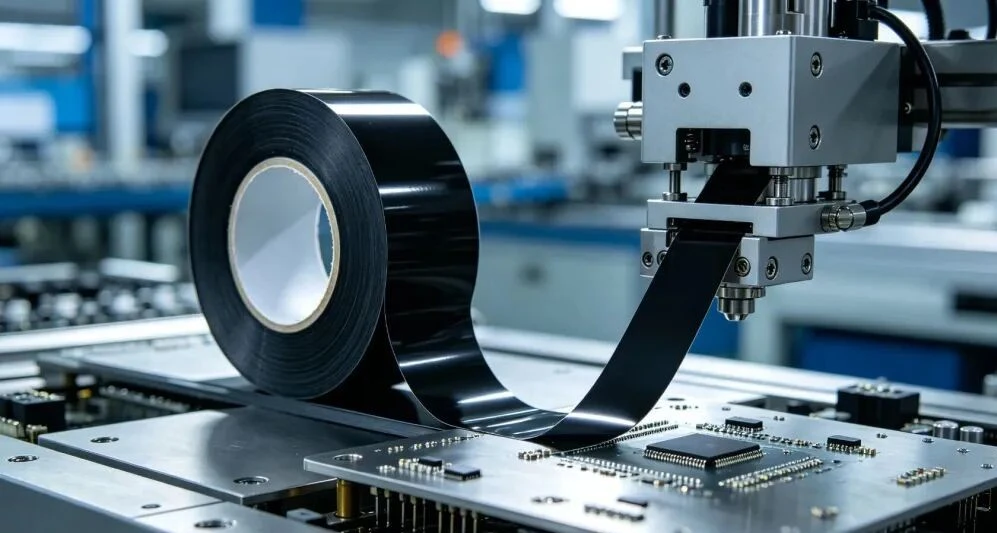
For many people, the first impression of industrial adhesive tape is still packaging tape or ordinary double-sided tape. But in the manufacturing industry, tape is a precision bonding solution that needs to meet four requirements simultaneously: mechanical, thermal, chemical, and electrical.
Take electronic devices as an example. Tape needs to complete fixation within millimeter-level spaces without affecting signal transmission, losing adhesion at high temperatures, or corroding sensitive components. In automotive applications, automotive-grade tape needs to withstand temperature cycles ranging from -40°C to over 100°C, as well as exposure to UV radiation, humidity, and vibration.
In other words, industrial adhesive tape is not simply about sticking something together. It is about maintaining adhesion under specific conditions, in a specific way, for a specific period of time. These three "specifics" are where the technical barriers lie.
02 Tesa's Product Matrix: Systematic Capabilities from Backing Materials to Adhesives
Tesa's industrial adhesive tape portfolio covers single-sided tapes, double-sided tapes, transfer tapes, mounting tapes, masking and surface protection tapes, packaging and filament tapes, electrical insulation tapes, and specialty adhesive systems. Within each category, products are further differentiated by backing materials, such as PET, nonwoven, foam, and cloth, as well as adhesive technologies including acrylic, rubber, and silicone.
The significance of this matrix-based portfolio is that when a customer presents a bonding requirement, tesa can develop a suitable solution by combining four dimensions: backing material + adhesive + thickness + liner, rather than simply providing a standard product.
Several typical directions include:
Double-sided adhesive tapes: Provide invisible bonding and lightweight design, suitable for internal fixation in electronic devices.
Mounting tapes: Provide high load-bearing strength for permanent fixation and can replace some mechanical fasteners.
Masking and surface protection tapes: Ensure precision during processes such as painting and electroplating, while allowing clean removal without adhesive residue.
Cloth tapes: Offer good flexibility and tear resistance, making them suitable for sealing, repairing, and bundling on rough or uneven surfaces.
High-temperature tapes: Maintain stable performance in high-temperature applications such as electronic component bonding, automotive manufacturing, solar panels, and paper and printing industries.
03 Electronics Manufacturing: The Invisible Skeleton Inside Foldable Phones and AR Devices
The internal spaces of new-generation devices such as foldable smartphones and AR glasses are constantly making concessions for thinner, lighter, and more reliable designs.
Consumer electronics is one of the applications with the highest technical demands for industrial adhesive tapes. Tesa provides comprehensive tape solutions for emerging electronic devices such as AR/VR products and foldable smartphones, covering optical bonding, structural bonding, component bonding, and functional bonding.
Take foldable displays as an example. The screen needs to be folded repeatedly, so the adhesive tape must maintain its bonding strength under dynamic stress while avoiding creases and interference with touch sensitivity. This places extremely high demands on the tape's thickness uniformity, elastic recovery, and bending resistance.
AR/VR devices present another challenge. Optical bonding tapes directly affect display performance-the refractive index, light transmittance, and yellowing resistance of the adhesive layer will ultimately affect the image seen by the user. An unqualified tape may cause bubbles, rainbow patterns, or long-term brightness degradation on the display.
This is why manufacturers of high-end electronic devices increasingly involve adhesive tape suppliers at the early design stage, rather than waiting until the assembly line to select products.

04 Automotive Industry: The Adhesive Bonding Revolution Driven by Electrification
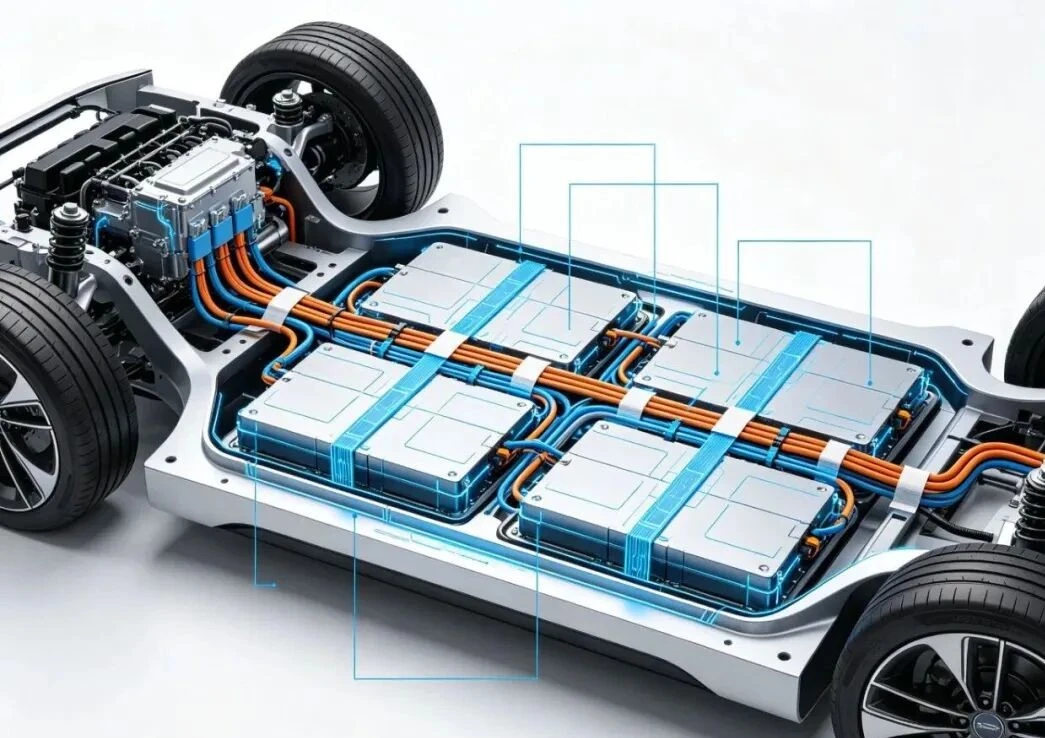
The battery packs, wiring harnesses, and interior components of electric vehicles are increasingly using adhesive tapes to replace traditional connection methods.
The automotive industry is another major application area for industrial adhesive tapes. Traditional internal combustion engine vehicles already make extensive use of tapes for wiring harness fixation, body sealing, and component bonding, while the rise of electric vehicles has further expanded the role of adhesive tapes.
The battery pack is a typical example. Cushioning foam tapes are needed between battery cells to absorb expansion and vibration. Structural adhesive tapes are required between battery modules and trays to achieve high-strength fixation. At the same time, the tapes also need to provide flame retardancy and electrical insulation. Compared with bolted connections, adhesive bonding can distribute stress, reduce weight, and avoid sealing problems caused by drilling holes.
Wiring harness fixation is equally important. Different surfaces inside a vehicle-from headliner fabrics and plastic components to metal body panels-require tapes with different levels of initial tack and temperature resistance. Tesa has developed low-VOC tape product lines for automotive applications, improving interior air quality while maintaining reliable bonding performance.
In addition, tapes play an indispensable role in automotive manufacturing for paint masking, surface protection, and transportation protection of components. In a modern automobile, the number of tape application points can often exceed one hundred.
05 Choosing Tape Is Not Just About Thickness: Three Key Considerations
When choosing adhesive tape, many purchasers first ask how thick it is and whether it has strong adhesion. However, professional tape selection should consider at least three dimensions.
First, what is the surface being bonded? Metal, plastic, glass, fabric, and powder-coated surfaces all have different surface energies and require different adhesive systems. Low-surface-energy materials, such as PP and PE, generally require specialized rubber-based or modified acrylic adhesives.
Second, how demanding is the operating environment? Temperature range, humidity, UV exposure, chemical contact, vibration, and stress conditions all jointly determine the durability level of the tape. The requirements for automotive-grade and consumer-electronics-grade tapes can differ by an order of magnitude.
Third, is the bonding permanent or temporary? Permanent bonding focuses on holding power and aging resistance, while temporary fixation or process protection emphasizes removability and clean removal without residue. The formulation logic of the two adhesive systems is completely different. Using the wrong one may result in either insufficient bonding strength or difficulty in removal.
Thinking through these three questions is more effective than simply comparing product specifications.
06 Boundaries and Trends
It should be noted that industrial adhesive tape is not a universal solution. In applications involving extremely high loads, continuous exposure to high temperatures, or the need for removable maintenance, mechanical connections and welding remain indispensable. The value of adhesive tape lies in being lighter, thinner, more uniform, and more efficient than traditional connection methods in suitable applications.
Looking at industry trends, three directions are worth watching. First, the miniaturization of electronic products is driving tapes toward thinner and higher-precision designs. Second, the growth of electric vehicles and energy storage is driving demand for structural bonding as well as flame-retardant and electrically insulating adhesive tapes. Third, under increasing sustainability requirements, low-VOC, recyclable, and solvent-free adhesive technologies are becoming industry-wide priorities.
Conclusion
Industrial adhesive tape is a typical invisible hero of manufacturing. It may not appear on a product's promotional page, but it can determine whether a product can be made thinner, lighter, and more reliable.
Companies such as tesa are essentially not just selling rolls of tape, but providing systematic material selection capabilities built upon accumulated expertise in materials science.


